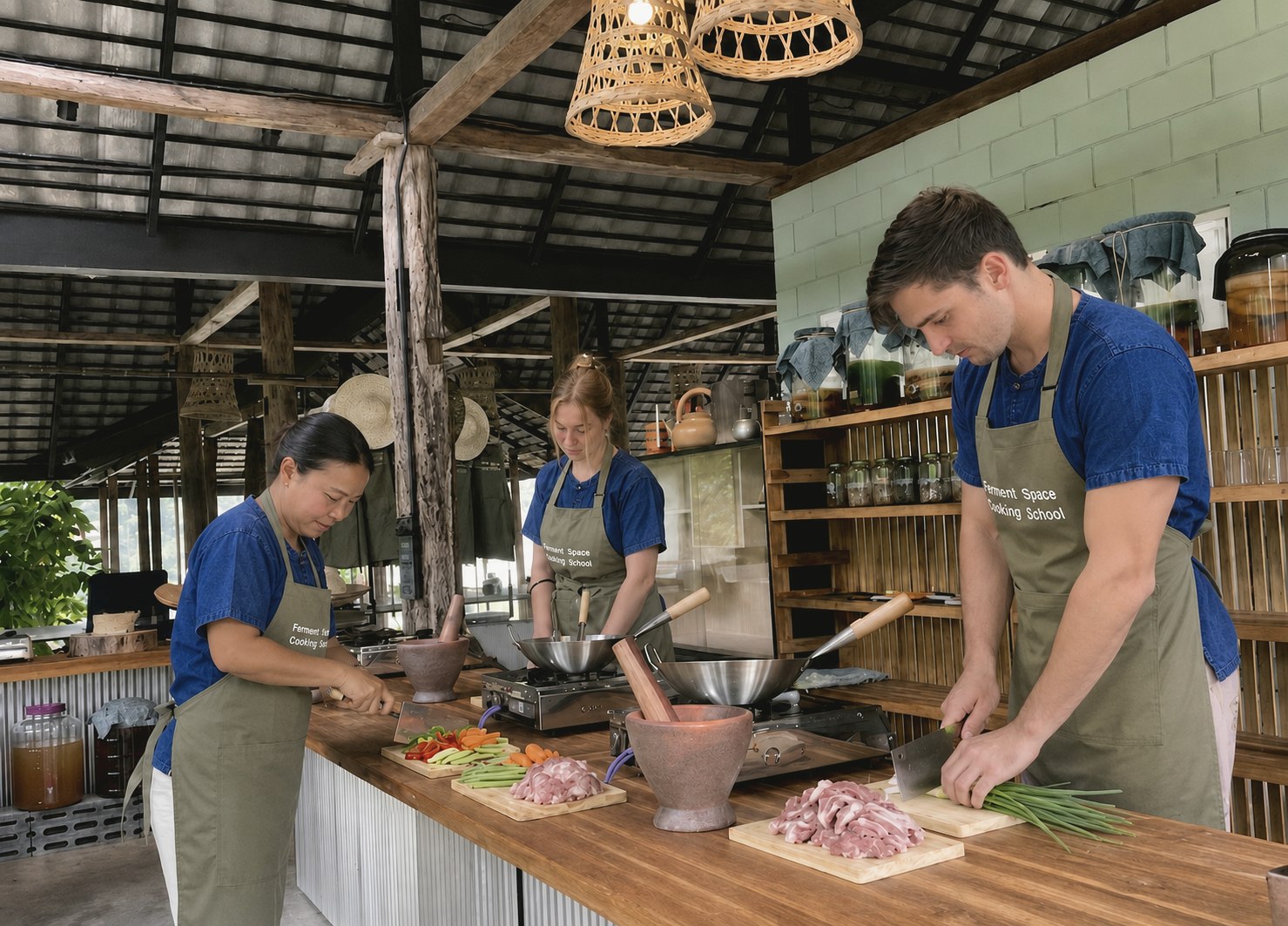
A 12-month Lanna cooking apprenticeship in the hills of Hang Dong, Chiang Mai — taught by a mother-daughter kitchen three generations deep in Northern Thai tradition.

Food and medicine were never two different things here — they were the same lesson, taught at the same stove.
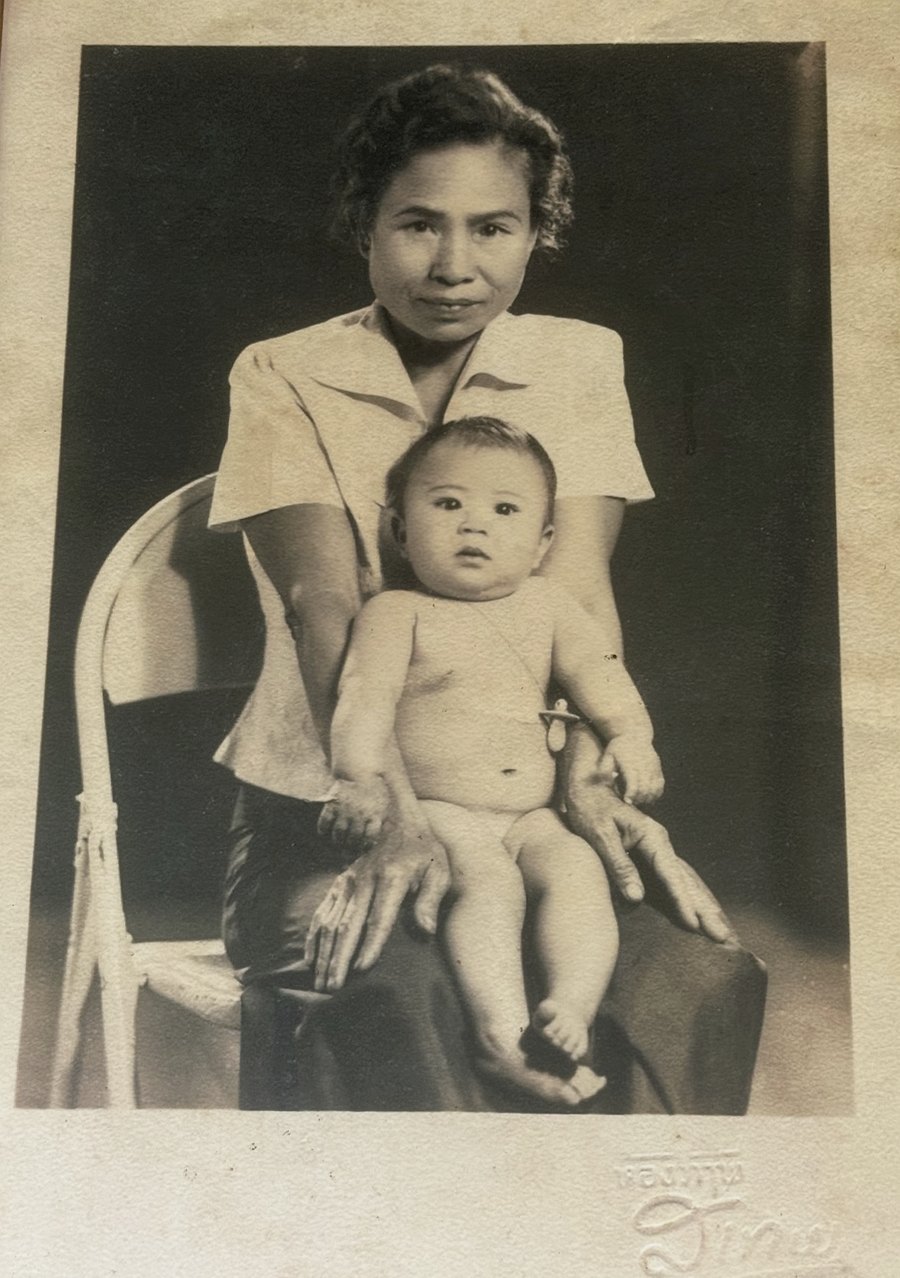
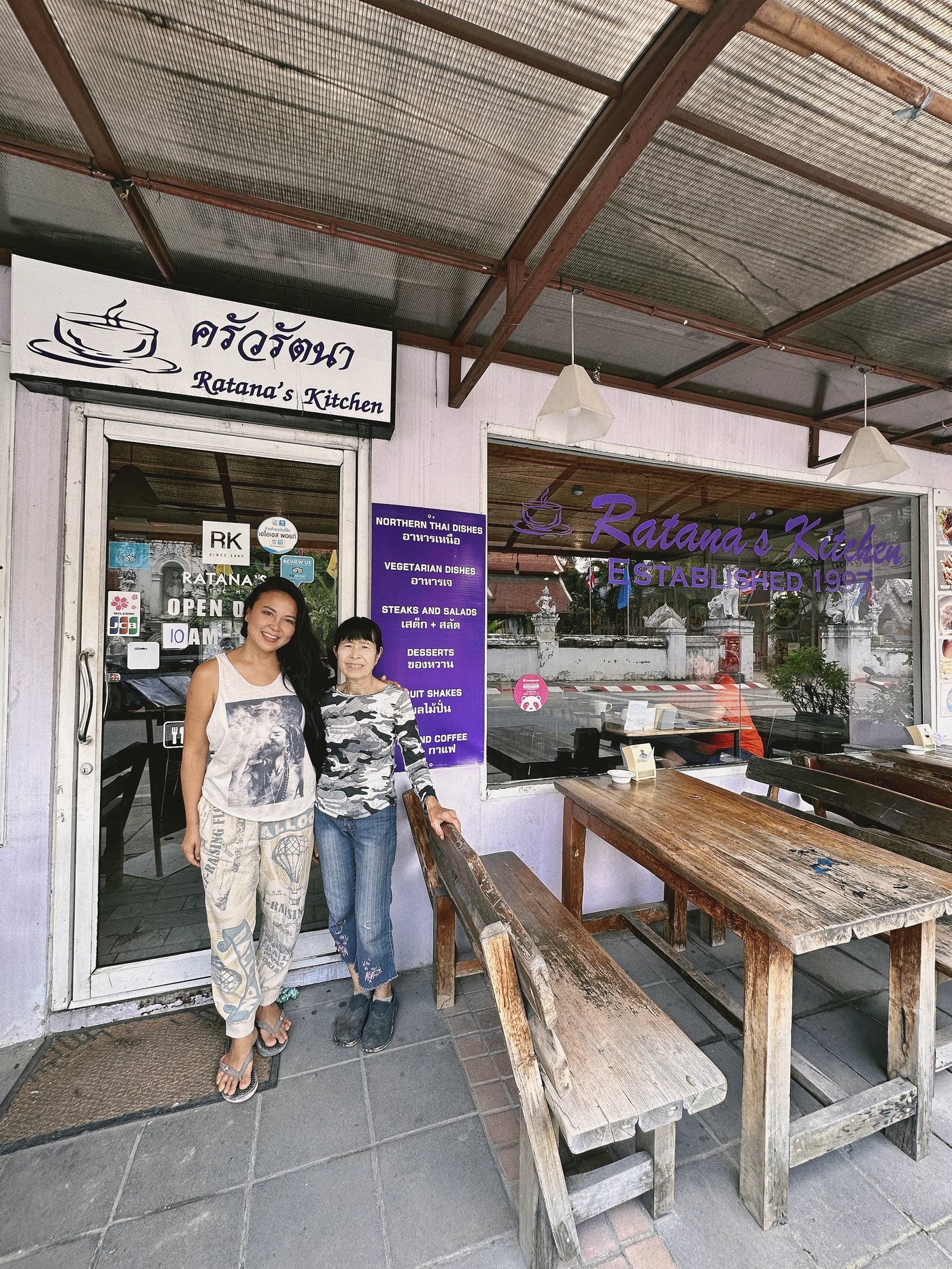
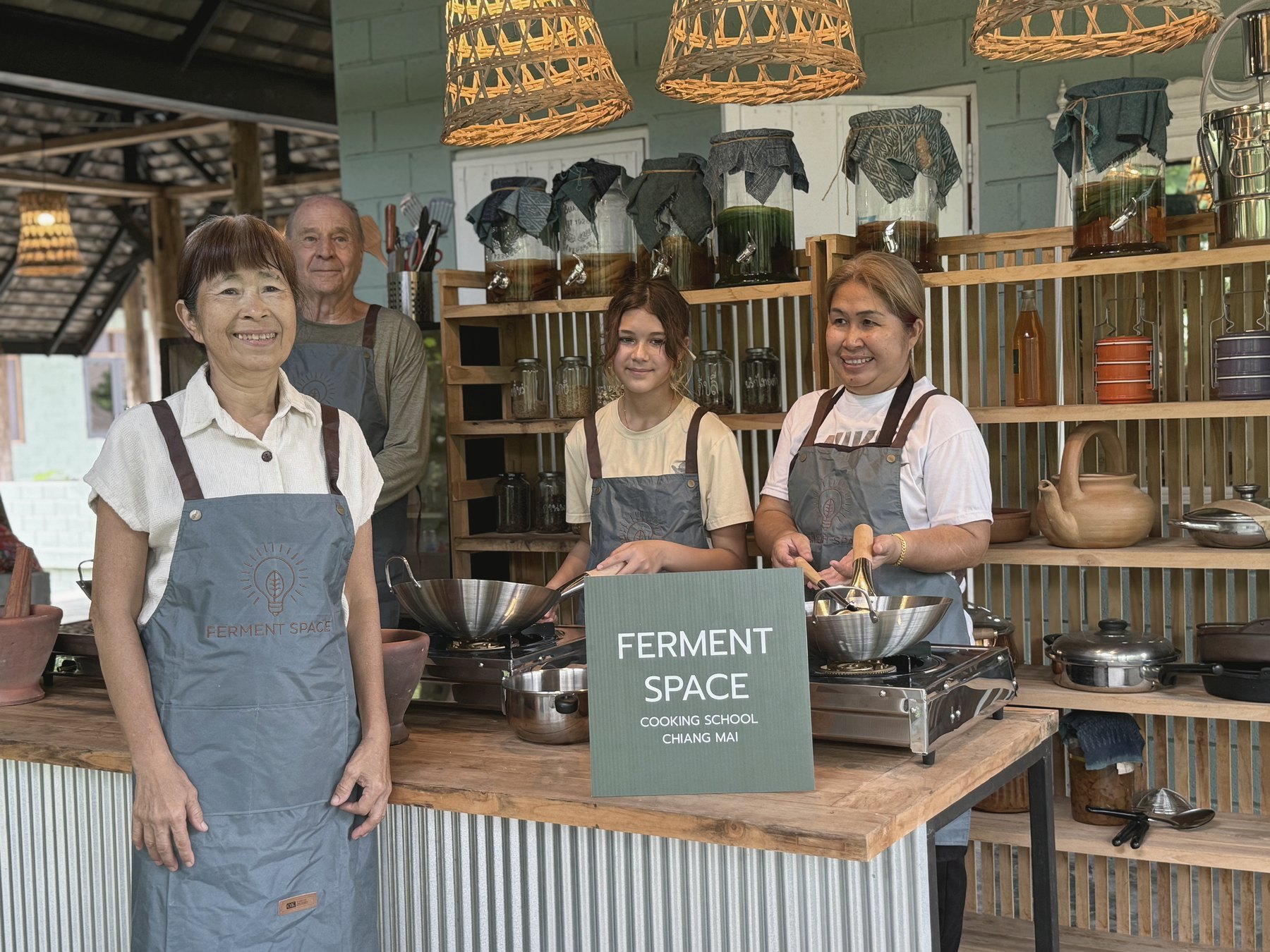
Ferment Space grew out of a family kitchen that has fed Chiang Mai since long before it had a name. Ratana Jaikusol learned to pound curry paste at her grandmother's side in the Lanna villages of the North. She opened Ratana's Kitchen in 1997 and spent 27 years cooking Northern and Central Thai food for more than 100,000 guests. Her daughter, Tai, grew up inside that kitchen — prepping herbs before school, cooking the line beside her mother through its busiest years.
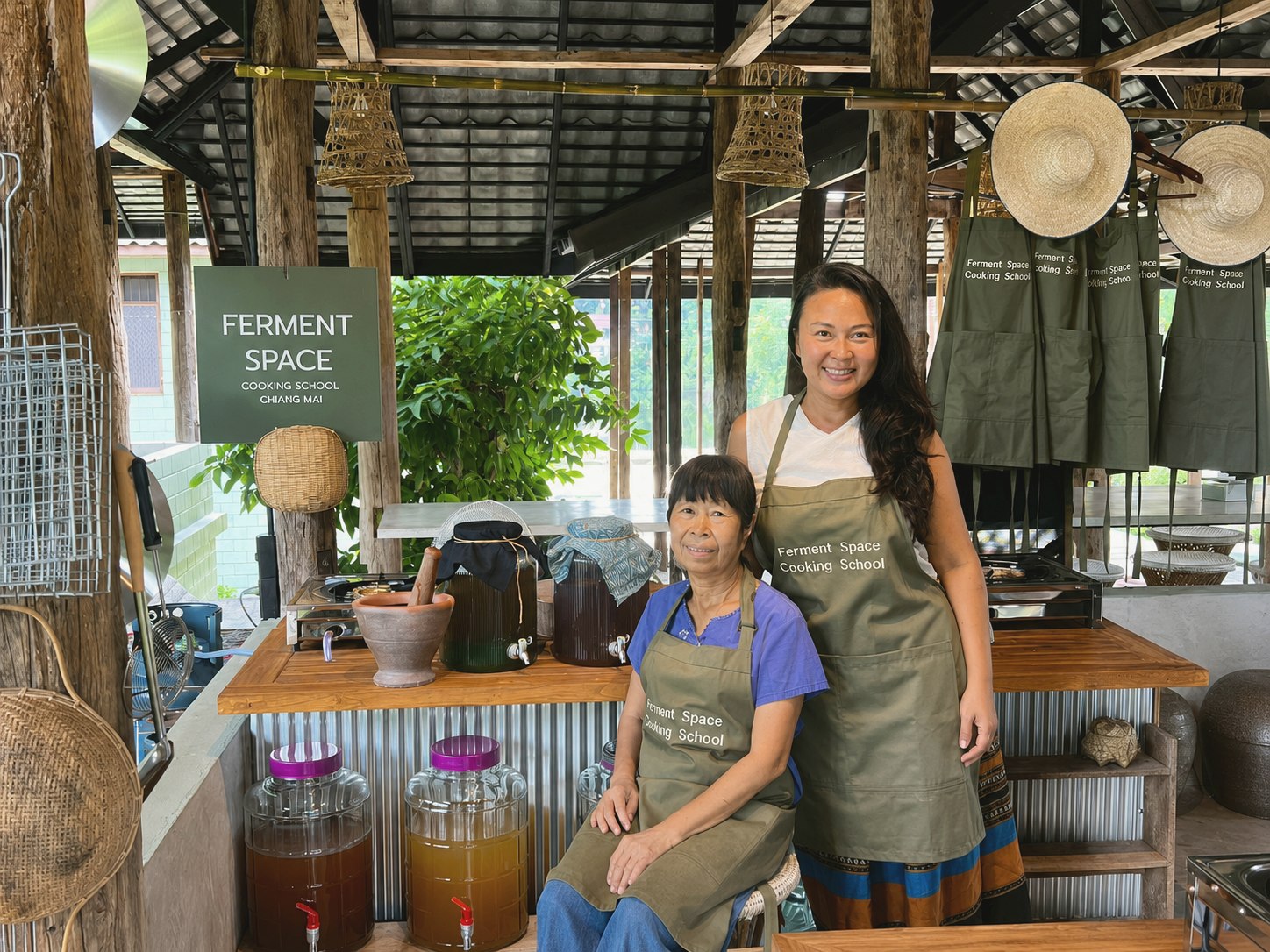
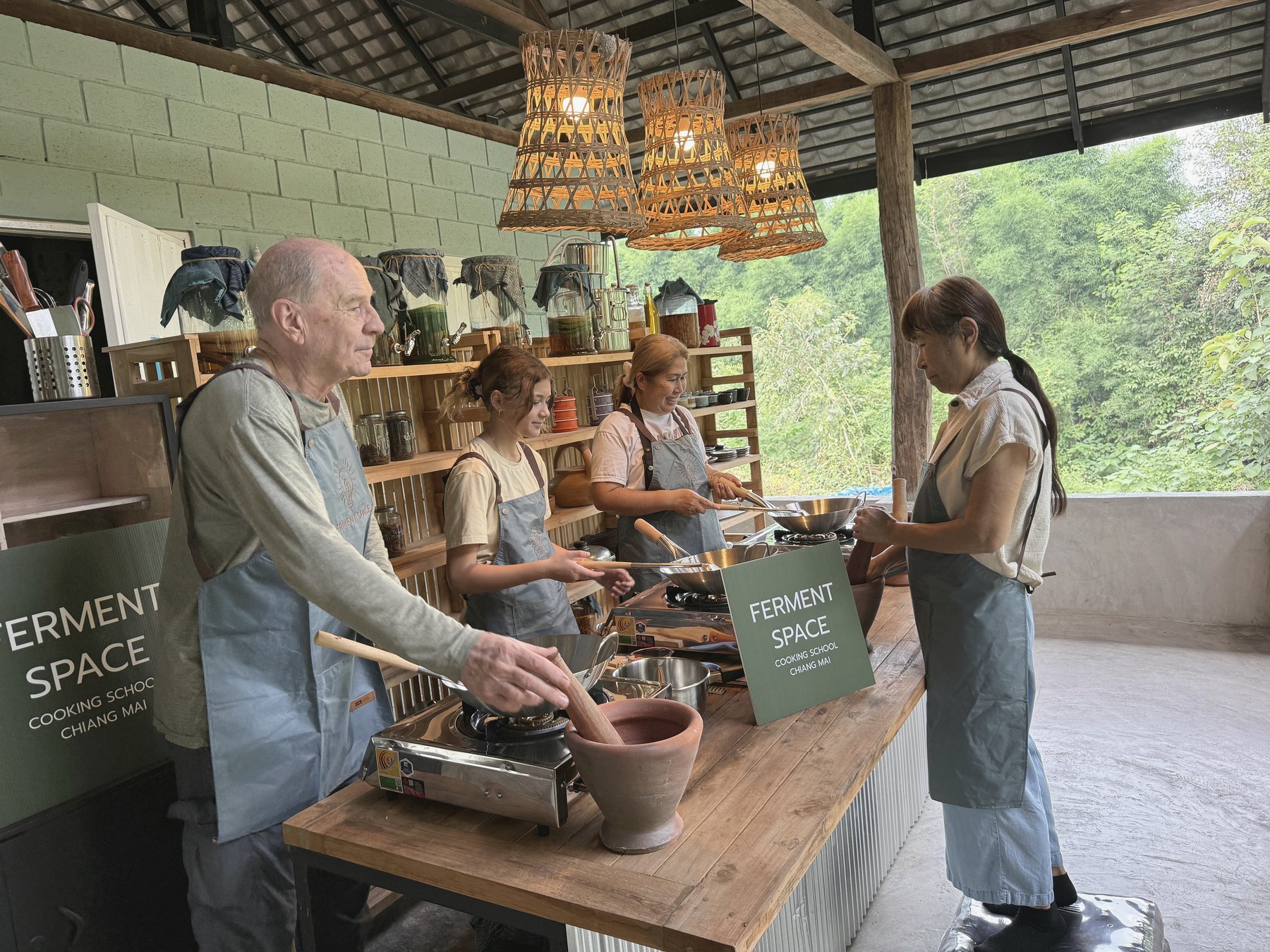
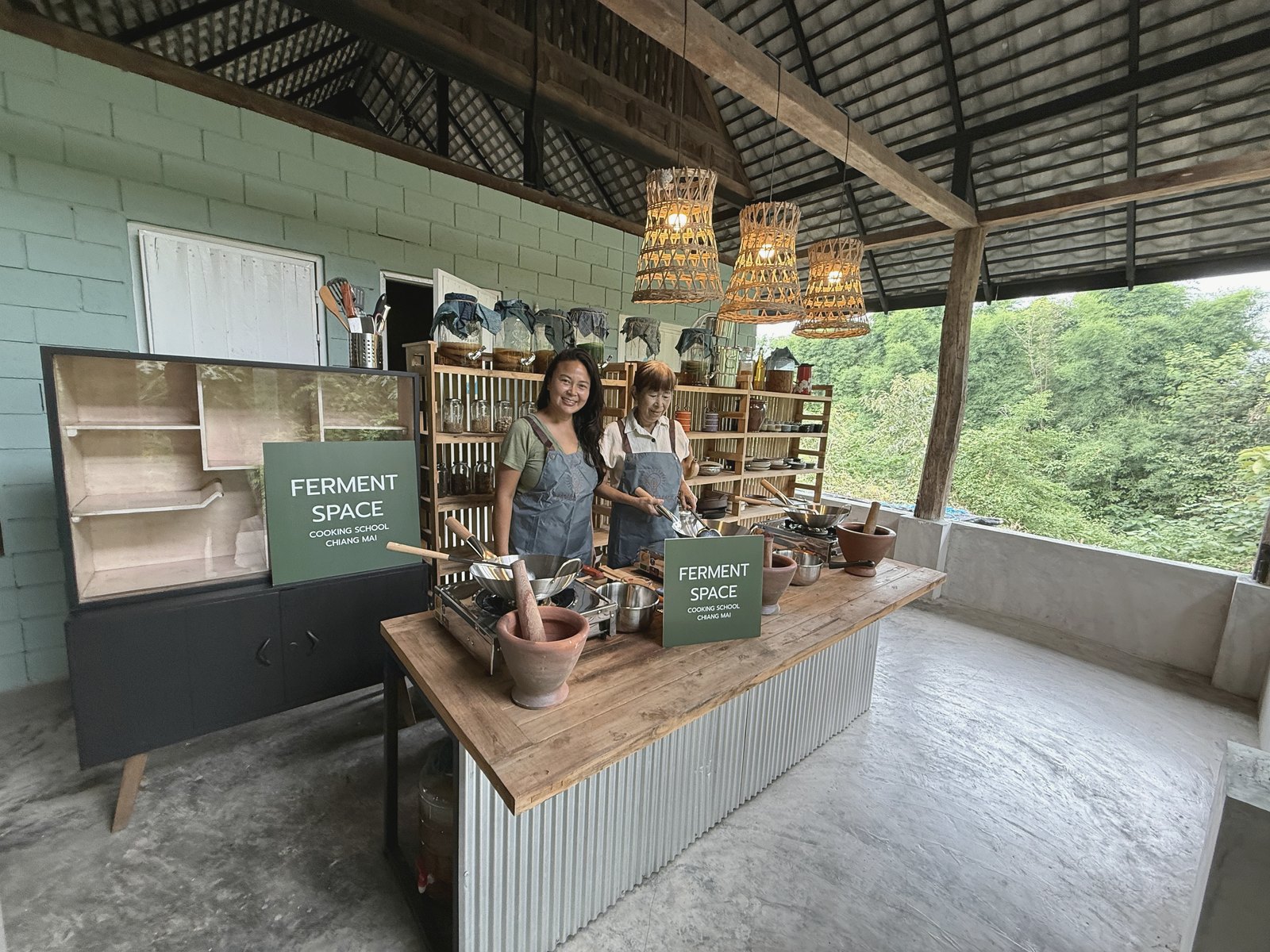
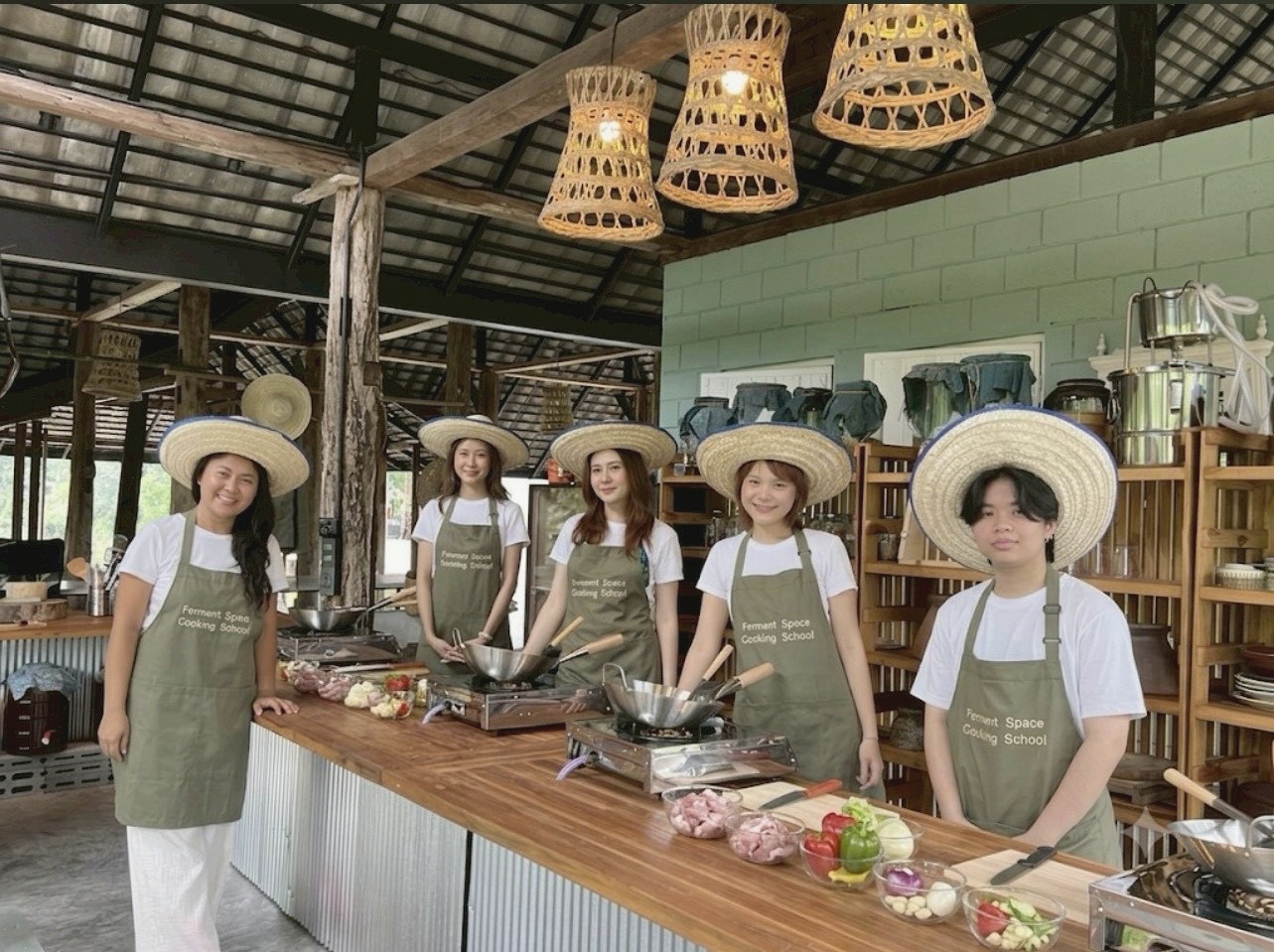
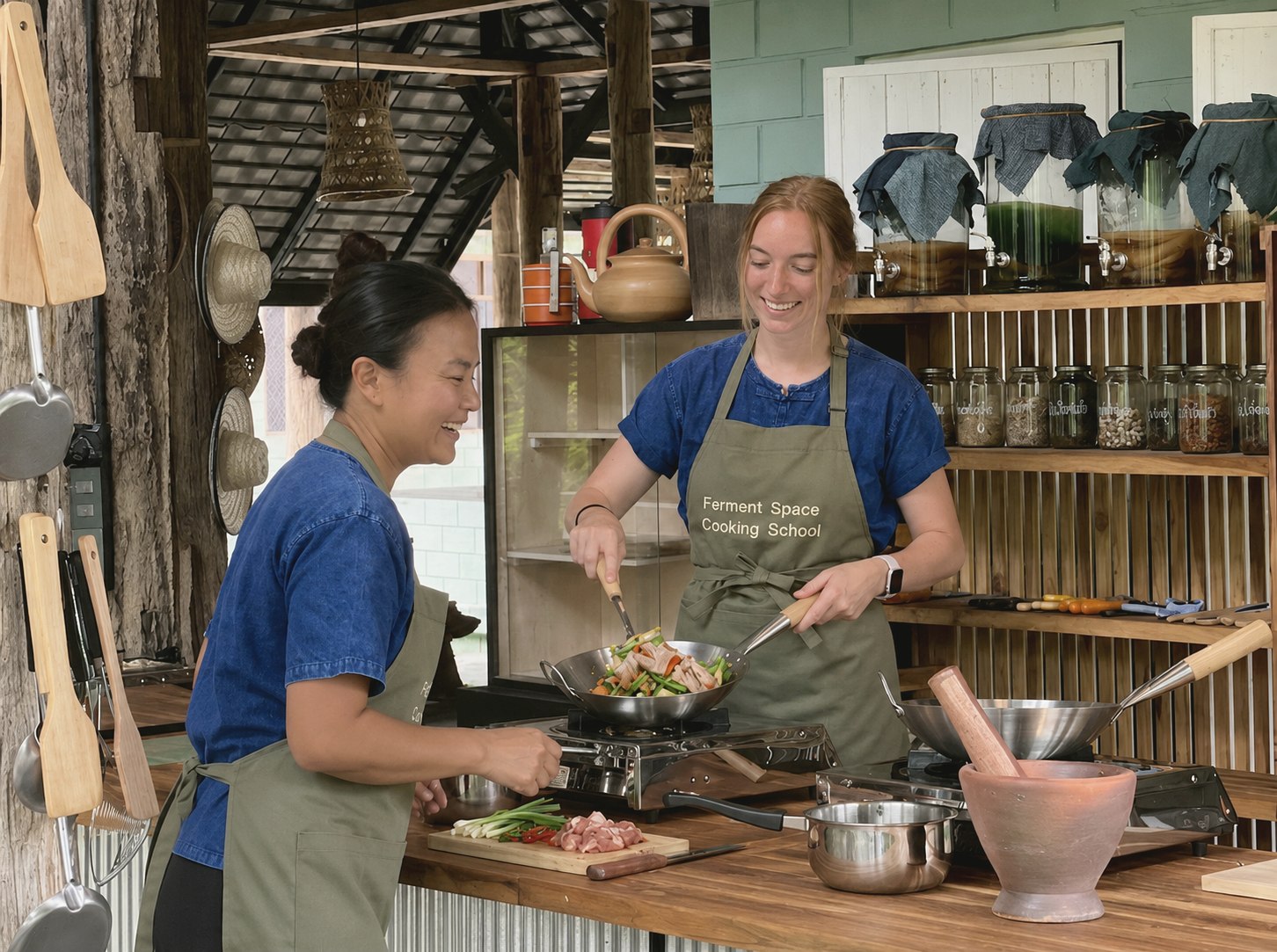
Today Ratana and Tai teach together at Ferment Space, in a fermentation studio and wellness garden overlooking a canal outside the city. Students don't just learn recipes here. They join a living family lineage, refined over almost three decades, and carried forward one class at a time.
Exactly as Lanna cooking has always been passed on — not from a curriculum, but from one person to the next.

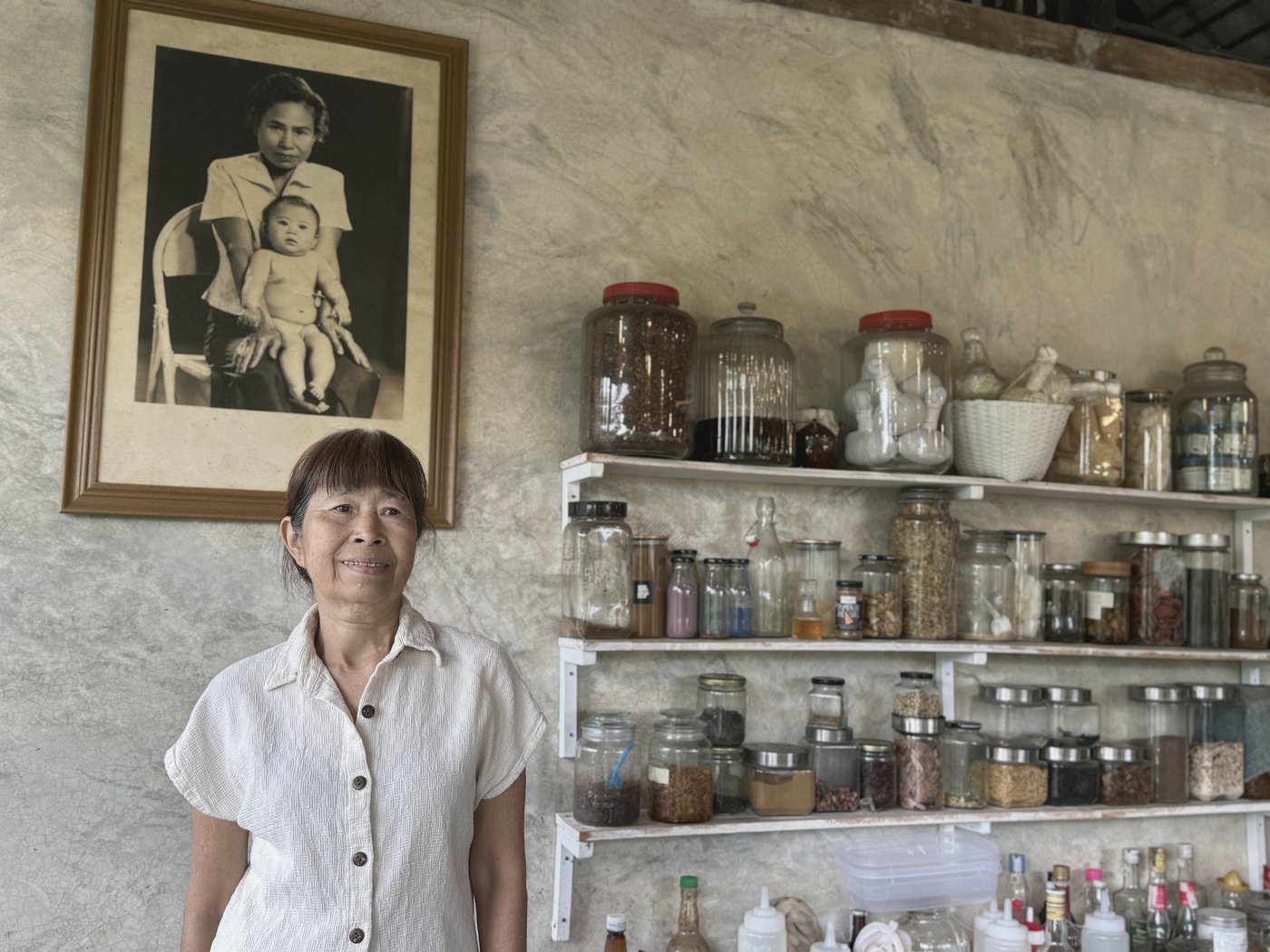
Born in 1955 on Thapae Road, Chiang Mai, into a Tai Yuan family of the Lanna Kingdom. Ratana learned to cook at her grandmother's side — pounding curry pastes by hand and fermenting soybeans and greens with the herbs of the North. She founded and ran Ratana's Kitchen for 27 years before retiring in 2024 to teach full-time.

Tai grew up inside her mother's kitchen and owned her own restaurant by age 18. She holds a HarvardX certificate in food fermentation and is a first-year student of Thai Traditional Medicine — where, as in Lanna tradition, food and medicine are treated as one practice.
A multiple-entry visa for people who want to live, learn and experience Thailand long term — supported with full school documentation for your application, or handled start-to-finish by our visa agency partner.
Each class builds on the last — fermentation and curry pastes early on, moving through the noodle stalls and street-food repertoire, and finishing in royal and modern Thai technique.
Traditional Chiang Mai flavors, herbal dishes, local techniques, and mountain-culture recipes passed down through generations.
Classic Thai dishes from Bangkok and central regions — balance, spice, and royal-inspired cooking techniques.


The Destination Thailand Visa (DTV) is a landmark long-stay visa launched by Thailand in July 2024. It gives you a 5-year multiple-entry visa with stays of up to 180 days per entry — renewable for another 180 days without leaving the country. It was designed for digital nomads, remote workers, retirees, freelancers, and people who want to deeply experience Thai culture. Unlike a tourist visa, the DTV lets you truly live in Thailand — build community, work remotely, and return freely for 5 years.
The Thai government created a "Soft Power" cultural education pathway within the DTV. Enrolling in an approved Thai culinary and cultural school satisfies this requirement. Ferment Space provides you with an official enrollment letter and embassy-aligned documentation — the exact paperwork needed for your DTV application. Our 12-month program covers Thai culinary arts, fermentation, Lanna cultural history, and seasonal cooking traditions.
Because Ferment Space isn't just a cooking school — it's a gateway into the Lanna way of life. In Northern Thailand, food is inseparable from culture. When you learn to make a proper Khao Soi, you're also learning about 700 years of Lanna kingdom history and the trade routes that shaped this cuisine. Our program gives you:
A tourist cooking class teaches you a recipe. Our program teaches you a way of being.
Lanna (ล้านนา — "a million rice fields") was an independent kingdom centered in Chiang Mai that flourished from the 13th to 18th century, with its own language, script, architecture, and food traditions entirely distinct from Central Thailand. Living here, you are surrounded by this heritage — in the temples, the markets, the way people greet each other, and above all in the food.
Lanna cuisine uses ingredients rarely found elsewhere: pak waan (sweet leaf), ma dua (bitter eggplant), phak chi lao (dill) — forest ingredients from a mountain culture. Learning this food turns you from a visitor into a neighbour.
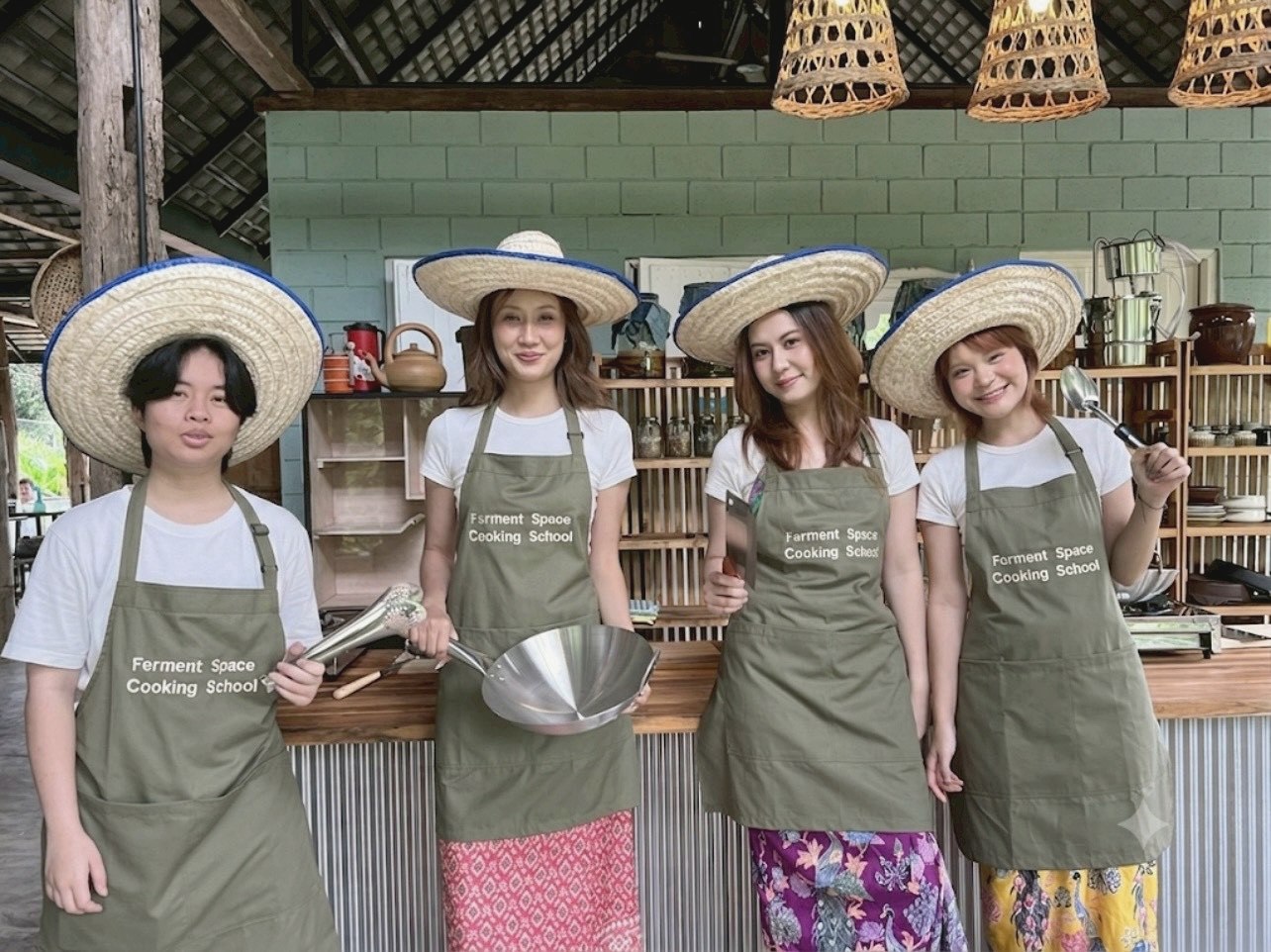
Most Chiang Mai cooking schools are designed for tourists passing through for one afternoon. Ferment Space is built for people who want to stay:
Each month builds your knowledge progressively through a different pillar of Thai culinary tradition:
Month 1 — Fermentation: The foundation of Lanna cuisine. Fermented fish sauce, pickled mustard greens, soybean paste.
Month 2 — Lanna History & Food Culture: Kingdoms, trade routes, and the cultural influences that shaped Northern Thai cooking.
Month 3 — Curry Pastes: Hand-pounding aromatics, understanding Lanna vs. Central Thai curry bases.
Month 4 — Soups & Broths: Tom Kha, Tom Yum, Khao Soi — slow-cooked depth of flavor.
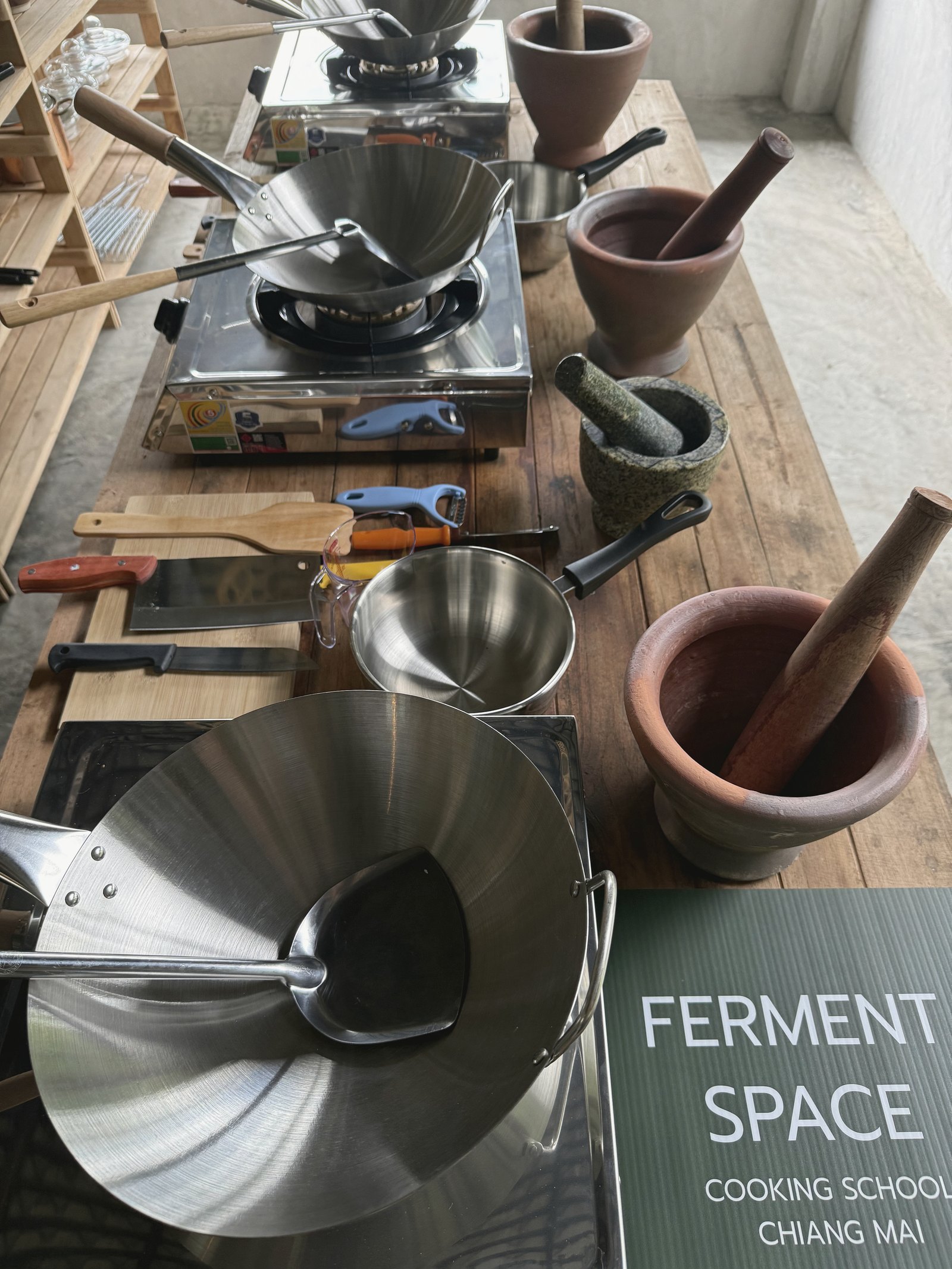
Month 5 — Stir-Fry Mastery: Wok technique, heat control, the "breath of the wok."
Month 6 — Salads & Larb: The Lanna art of balance: sour, salty, spicy, fresh.
Month 7 — Street Food Favorites: Pad Thai, Mango Sticky Rice, Sai Ua sausage, Khanom Jeen.
Month 8 — Noodles & Rice: From rice paddy to table; Thailand's many noodle traditions.
Month 9 — Thai Desserts & Sweets: Coconut sweets, sticky rice desserts, ceremonial flower-shaped treats.
Month 10 — Royal Thai Cuisine: The refined, elaborate dishes of the Thai royal court tradition.
Month 11 — Fusion & Modern Thai: How young Thai chefs are reinventing tradition for the modern world.
Month 12 — Seasonal Feast & Graduation: A full community celebration feast and ceremony.
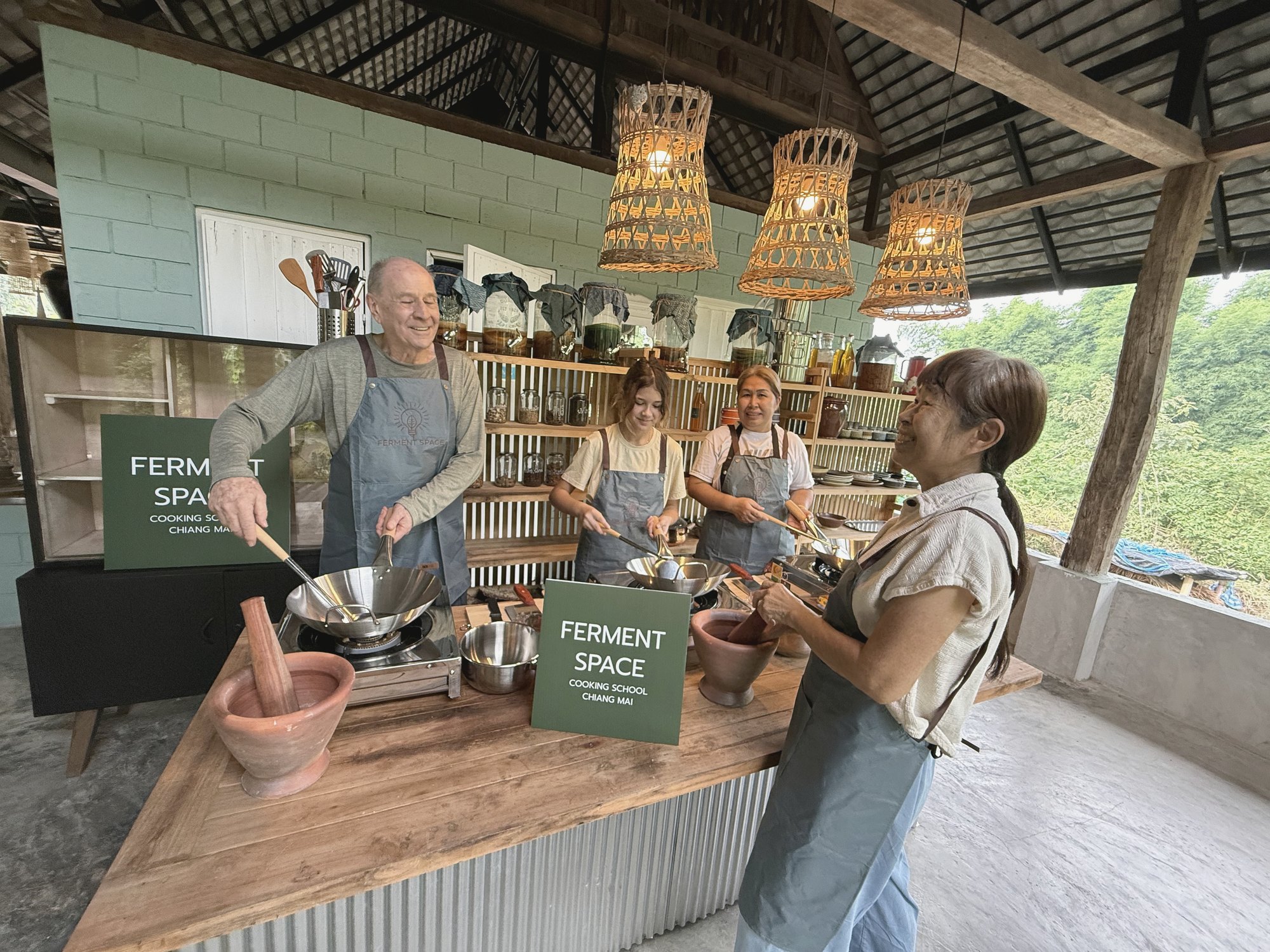
Every enrolled student receives 12 free sauna & ice bath day passes. Facilities include a wood-fired Finnish sauna for deep recovery, a cold-plunge ice bath for cold therapy and mental resilience, and quiet garden space to relax between classes.
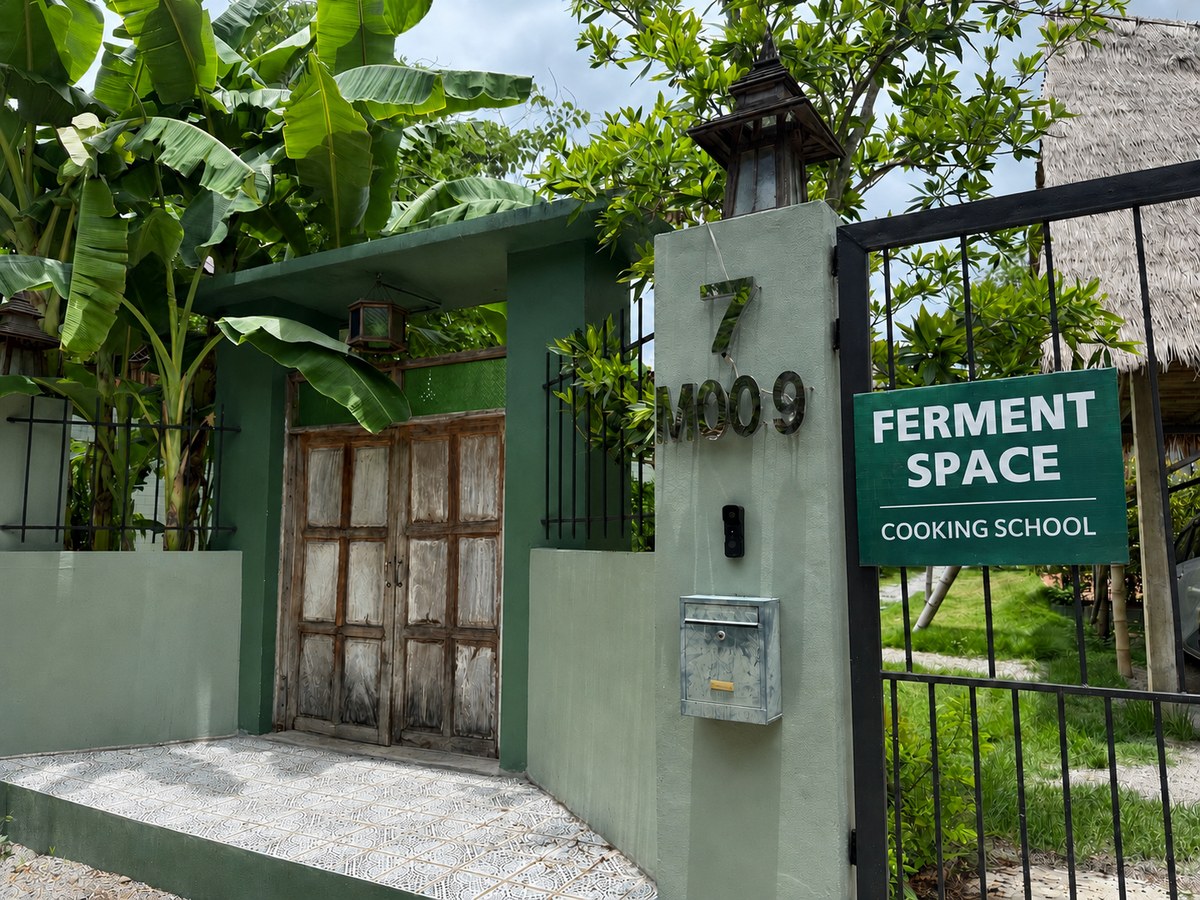
We are at 7 Moo 9, Nam Phrae, Hang Dong, Chiang Mai 50230 — a quiet property about 20 minutes south of the Old City in the Hang Dong district. Hang Dong is where many long-term expats and local Thais choose to live — quieter, more authentic, away from tourist crowds, and close to excellent local markets. A Grab from the Old City takes about 20 minutes and costs around 80–120 baht. Open in Google Maps ↗
The fastest way: WhatsApp us at 093-272-0050 and we'll personally walk you through the program, visa paperwork, and any questions. You can also join our free DTV Community WhatsApp Group to connect with current students, get real answers from people already living the program, and stay updated on class dates. Email us at fermentspaceinfo@gmail.com anytime.

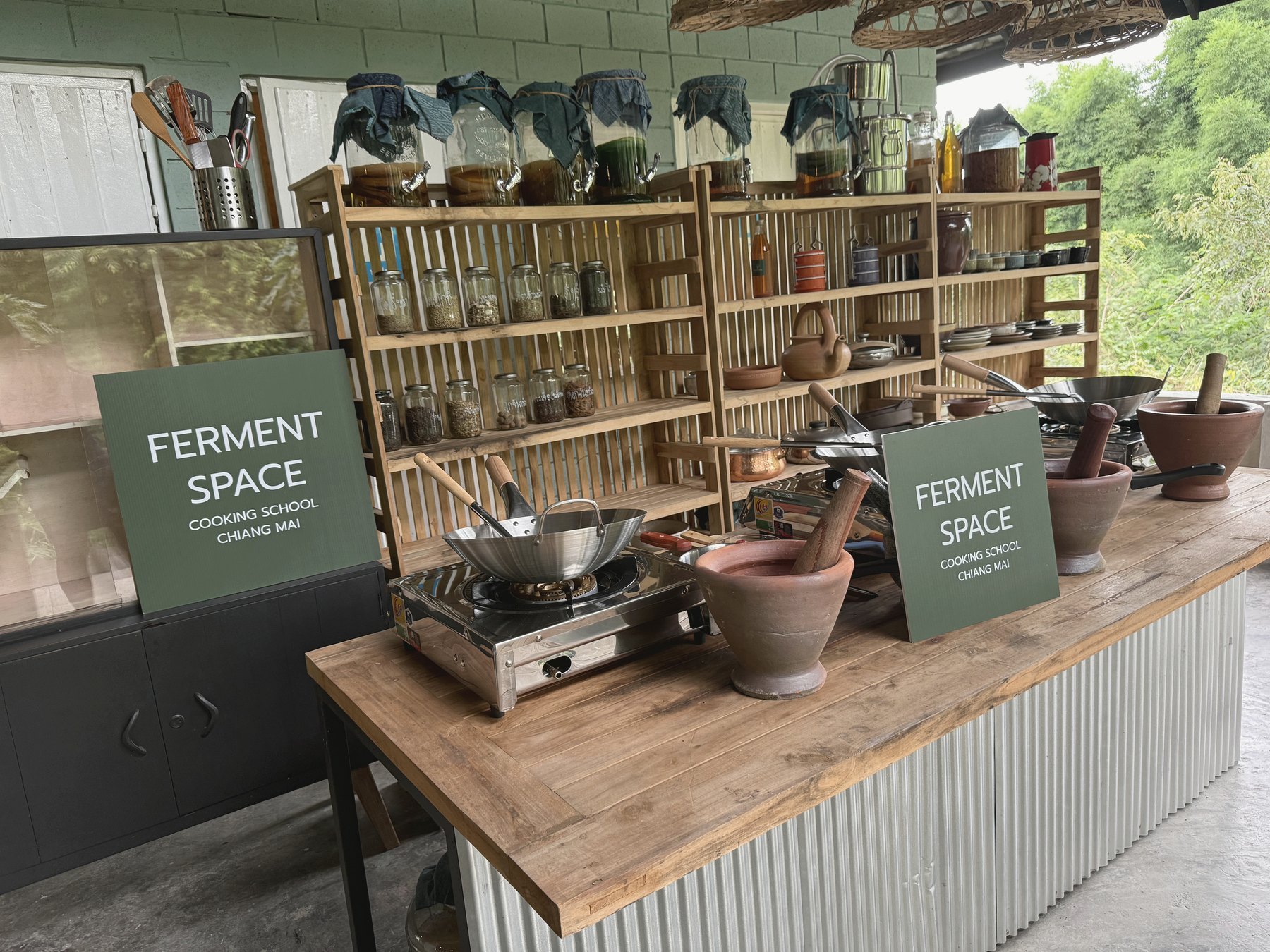
The studio sits above a canal on the quiet edge of Hang Dong, ten minutes from the ring road — jars fermenting on open shelves, a wood-fired pavilion, and the Northern hills just past the treeline.
Scan the QR code, or tap below to join students and graduates chatting about the cooking school and the DTV visa process.
Join on WhatsApp